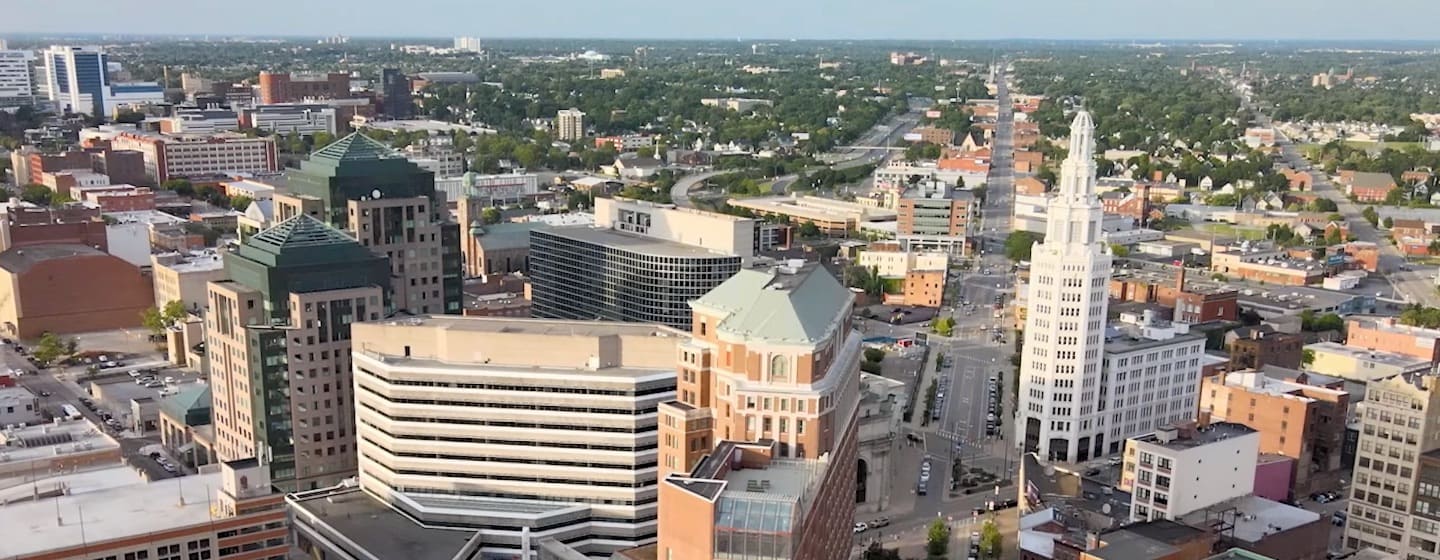
The Concrete Labyrinth: A (Slightly Exhausted) Psychologist’s Guide to Dating in NYC
Look. I love New York. I do. The energy, the food, the feeling that anything could happen.
But after fifteen years of listening to patients cry on my couch about dating here — and after my own share of disasters — I have one thing to say: this city is emotionally brutal for romance.
Eight million people. Five boroughs. Endless apps. And somehow, everyone feels completely alone.
I see it every day. Brilliant, successful, gorgeous people who walk into my office, collapse into the chair, and say the exact same words: “Why is this so hard? I’m a catch. What’s wrong with me?”
Usually, nothing is wrong with them. The problem is the ecosystem. NYC dating isn’t a social scene — it’s a psychological pressure cooker designed to keep you single.
Let me explain why. And yeah, I’ll tell you how I’ve screwed this up myself.

The Paradox of Choice (Or: Why You Can’t Commit to Dinner)
There’s this concept in psychology called the Paradox of Choice. Basically: when you have too many options, you freeze up. You can’t decide. And when you finally do pick something, you regret it because you keep thinking about the options you didn’t pick.
Now translate that to dating.
On a random Tuesday, you could swipe through a thousand people within a mile of your apartment. A thousand. That’s not a dating pool — that’s an infinite scroll.
And here’s what happens to your brain: it stops seeing people as people. They become products. Profiles. Swipeable objects.
I had a patient — let’s call him Jake — who went on four dates in one week. Four. And he complained that no one was “quite right.” One laughed weird. One lived in Washington Heights (too far). One was perfect but wore the wrong shoes.
Jake isn’t a bad guy. He’s just trapped in the “Next Best Thing” syndrome. His brain whispers: Why settle? Someone better is literally 400 feet away.
Spoiler: that someone better doesn’t exist. And even if they did, Jake wouldn’t recognize them because he’s too busy looking for the next one.
The Resume Date (We’ve All Been There)
New Yorkers hate wasting time. I get it. Rent is high, hours are long, and you have to be at spin class at 7 AM.
But that efficiency mindset destroys romance.
I see it all the time. A first date that sounds like a job interview:
- “Where did you go to school?”
- “What’s your trajectory at the firm?”
- “Do you rent or own?”
- “What are your five-year goals?”
I call this the Resume Date. And I’ve been guilty of it myself.
Here’s the problem: when you vet someone like a job candidate, you activate the “task-oriented” part of your brain. You’re looking for stats, not connection. You never let your guard down. You never laugh too loud or say something stupid or admit that you’re scared.
And then you wonder why there’s “no chemistry.”
Chemistry isn’t a checklist. Chemistry happens when two people stop performing and start being. You can’t schedule that. You can’t optimize it. You just have to show up — messy, tired, imperfect — and hope the other person does the same.
The Geography of Heartbreak (Yes, the L-Train Matters)
To someone outside New York, this sounds insane. But here? Geography is destiny.
I’ve sat with couples on the verge of breaking up because one lives in Astoria and the other lives in Crown Heights. A 45-minute subway ride. To a New Yorker, that’s a long-distance relationship.
In the early stages of dating, you need low-stakes proximity. You need to be able to see someone easily, spontaneously, without a logistical military operation involving three train transfers and a delayed G-train.
When every date is a trek, the “cost” of the relationship starts to outweigh the “reward.” And so people give up. Or worse — they limit their search to their own neighborhood.
I had a patient who refused to date anyone outside a 15-minute walk from her apartment in Park Slope. She literally said, “I’m not taking the R train for a maybe.”
That’s not dating. That’s convenience-shopping. And it’s lonely.
Ghosting: The Silent Exit (And Why It Hurts So Much)
Here’s the thing about small towns: if you treat someone badly, your mom hears about it at the grocery store. There’s accountability.
In New York? You can disappear. Poof. Gone. The chances of running into that person again are almost zero.
That’s why ghosting is so common here. It’s not that New Yorkers are meaner — it’s that there’s no social cost to being a coward.
But here’s what I want you to understand: ghosting isn’t just rude. It’s a small trauma.
When someone disappears without explanation, your brain processes that rejection like physical pain. Seriously. The same neural pathways light up. And because there’s no closure — no fight, no breakup talk, no “I’m sorry, it’s not you” — your mind spins in circles trying to solve a puzzle with missing pieces.
I’ve seen patients obsess for weeks over a text that never came. They re-read old messages. They check Instagram stories. They drive themselves crazy.
And the worst part? The ghoster has no idea. They’re already on date three with someone new.
So yeah. Ghosting is real. It’s painful. And it’s made dating here feel like a minefield.
The Power Couple Trap (Or: When Your Relationship Is a Brand)
New York rewards achievement. We are what we do, what we earn, who we know. That seeps into dating.
I see so many people looking for a partner who “elevates” their status. Someone who looks good on Instagram. Someone who impresses their coworkers at the rooftop bar in SoHo.
I call this the Power Couple Trap. And I’ve fallen into it myself.
You start performing the idea of a relationship instead of actually building one. You care more about how you look together than how you feel together.
And here’s the kicker: I’ve sat with couples who are incredibly successful in public — beautiful, rich, admired — who are profoundly lonely at home. Because their connection is based on status, not vulnerability. They don’t know how to fight. They don’t know how to apologize. They’ve never had a real conversation about what scares them.
That’s not a relationship. That’s a branding exercise.
The 400-Square-Foot Pressure Cooker
Space is a luxury here. Most people live in apartments the size of a closet, often with roommates well into their 30s.
This messes with dating in ways you wouldn’t expect.
You can’t have a “middle ground.” You’re either in loud, crowded public spaces — bars, restaurants, parks — or you’re trapped in a tiny apartment with nowhere to hide your dirty laundry (literal and metaphorical).
I call this the U-Haul Syndrome of the North. Because living alone is so expensive, couples move in together way too fast — not because they’re ready, but because it’s financially logical.
Psychologically, this skips a crucial phase. You never learn to be a couple while staying individuals. You go from “strangers” to “roommates who share a bed” with no breathing room in between.
And then you wonder why you’re fighting about the dishes and whose turn it is to take out the trash.
Ambition vs. Affection: The Struggle
New York runs on hustle culture. Everyone is grinding, climbing, optimizing.
And dating? Dating is treated like a side project. Something to “fit in” between the gym and the late-night emails.
But here’s the truth: you cannot optimize a relationship like you optimize a spreadsheet. Building a secure attachment takes time. It takes consistent emotional availability. It takes showing up when you’re tired and grumpy and not at your best.
I see so many workaholics who want a partner who is “easy” — someone who makes no demands, who doesn’t need attention, who understands that work comes first.
That’s not a partner. That’s a houseplant.
And even a houseplant needs watering.

The Survival Guide (What Actually Works)
Okay. That was a lot of doom and gloom. But here’s the good news: I’ve seen people find real love here. Deep, messy, lasting love.
It just requires a different mindset.
Here’s what I tell my patients — and what I try to practice myself:
1. Slow down.
Limit your options. Pick one or two people to focus on at a time. Delete the apps for a week if you feel burned out. Quality requires focus.
2. Ban the resume.
For the first three dates, no work talk. No stats. No “what do you do.” Talk about values. Stories. Fears. What made you cry last year. What you were like in high school.
3. Audit your must-haves.
Separate dealbreakers (kindness, honesty, how they treat waiters) from preferences (height, neighborhood, job title). Most of my patients end up with someone who didn’t fit their “type” at all.
4. Stop playing it cool.
This is the big one. New Yorkers are obsessed with seeming unbothered. “Oh, I don’t care if you text back.” “Oh, I’m fine keeping it casual.”
Stop that. If you like someone, say it. If you want a commitment, ask for it. The worst that happens is they say no — and then you know. The alternative is months of anxiety and pretending.
5. Build a life, not a search.
The most attractive thing to a healthy partner is someone who is genuinely engaged in their own life. Hobbies. Friends. Passions that have nothing to do with dating.
When you stop hunting for love and start living — that’s when love usually shows up.
Final Thoughts (From Someone Who’s Still Figuring It Out)
New York is a hall of mirrors. It reflects our insecurities, our ambitions, our fears. It offers a million distractions to keep us from looking at who we really are and what we really need.
But beneath the noise — the subway, the sirens, the expensive cocktails — the human need for connection hasn’t changed.
We want to be seen. We want to be known. We want to come home to someone who makes the city feel a little less chaotic.
The secret isn’t finding the right app or the right bar. It’s staying human in a system that wants to turn you into a consumer.
When you stop shopping for a partner and start connecting with a person — the concrete labyrinth starts to feel a lot more like home.
I’m still learning that myself. But I’m getting better.
FAQs (Short, Honest, No Fluff)
Yes. Anonymity makes it easy. No social cost. It sucks, but that’s the reality.
Because in a small town, you can’t avoid people. Here, you can be surrounded by millions and still feel invisible. It’s called the Urban Paradox. It’s real.
As soon as not knowing gives you anxiety. Usually around two months. Don’t wait for the “perfect moment” — there isn’t one.
No. Follow your own pace. Anyone who pressures you isn’t worth your time.
The city attracts avoidant types because it rewards independence. But plenty of secure people are here too — they’re just harder to find.
Take a month off. Seriously. Delete the apps. Stop going to bars. Recalibrate. Your nervous system needs a break.
No. They confuse “high standards” with “perfectionism.” Real standards are about character, not tax brackets.