Honest Look at Love When Everyone Knows Your Name
Alright, let me just say this upfront before anyone comes for me in the comments. I have never lived in Nunavut. Never spent a winter there, never done the whole fly-in grocery run, none of it.
What I have done is sit with a lot of people over the years who were trying to find love in places where privacy is basically a myth, and I have read pretty much everything decent that has been written about dating up north.
Some of it twice, because honestly the first time I was not paying close enough attention. So take what follows as one clinician’s honest read, not some kind of gospel from someone who has earned the right to speak on it.
Anyway. Here is the thing that keeps bugging me, and it took me a while to put my finger on it. Every bit of dating advice out there assumes you have options. Swipe, ghost, vanish. Nunavut does not do that. Not even a little. And the longer I sit with it, the more I think that is not some tragic flaw. I think that might be the whole point.
So Your Ex Lives in the Same House
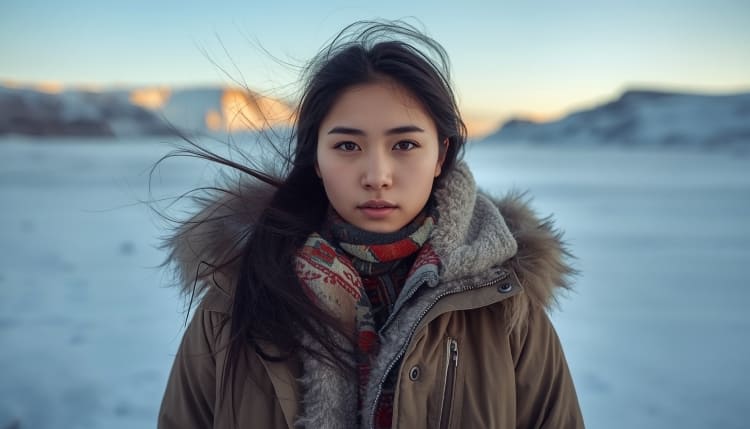
Pangnirtung is one of those fly-in communities, about 1,400 people. Housing is tight. I do not mean “oh, it is hard to find a place” tight. I mean tight like, you break up with someone and there is literally nowhere else to go. That was Ryan Oliver’s situation. Seven-year marriage, done, and he is still under the same roof as his ex-wife. Watching her start seeing someone else. No clean break. No new city. No fresh start.
He talked about how any public outing happens in front of a good chunk of the whole community, and how your business just sort of becomes everyone’s business.
Yeah, that sounds rough. I am not going to pretend it does not. But here is the thing I keep circling back to. When you genuinely cannot hide, you stop burning energy on hiding. You start putting it into being straight with people instead. And being straight with people, actually talking to them, is what keeps most relationships alive. Or kills them. Usually it is the not-talking that does the killing.
A Sneaky Link When Everyone Knows Your Mother
Can we talk about the sneaky link for a second? Because I think it says something uncomfortable about how we date down here.
The whole sneaky link thing works because of anonymity. You keep that casual person separate from your real life. You ghost someone and never see them again. I have done it. You have done it. It is easy when nobody is watching.
Now try that in Nunavut.
There is a woman named Alexia Cousins. Thirty, single, raising a daughter in Iqaluit. She reckons she is related to somewhere between 60 and 70 percent of the Inuit population in her community. I had to read that line twice. Then she dropped the second part, the part that really got me. The people who do show up on the apps, or who try to buy you a drink at the bar, are often already taken.
So the pool is not just small. It is small and messy and everybody knows everybody’s business.
Cousins has lived in Toronto and New Brunswick, so she knows what a real dating pool feels like. She said you have a bigger pile to pick from down south. Up north you have a puddle, and half the people in it are your cousins. I laughed when I read that. Then I stopped, because she was not really joking.
This is where our whole obsession with options falls apart, if you ask me. More choices do not actually make people happier. I have met plenty of folks with a thousand matches who are lonelier than anyone up north. In Nunavut, fewer choices force you to do something radical. They force you to figure out what you actually want before you open your mouth.
If you are thinking about a friends with benefits setup in a place like this, you cannot just wing it. You have to be brutally clear about what it is and what it is not. Say it out loud. Say it again. Because there is no escape hatch. You will see that person at the grocery store tomorrow. You will see them at the community hall next week. You will see them at your aunt’s birthday party forever.
And the research on friends with benefits relationships keeps saying the same thing: these things live or die on clear communication and boundaries everyone actually agrees on. In Nunavut, those boundaries are not just emotional. They are geographic. You cannot dodge an awkward conversation by avoiding a neighborhood. You have to face it. Honestly, a lot of us down here could take notes.
The Facebook Group That Quietly Changed Everything
January 2019. Angela Aula starts a private Facebook group called Uvanga Amma Ivvi, which means “Me and You,” for Inuit singles. She picked Facebook on purpose. Slow internet up there, not everyone has the latest app, but Facebook loads fast and everybody is already on it. Within weeks, over 300 members. Regional subgroups pop up. So does an LGBTQ chat.
I think this is genuinely clever, and I mean that as a professional, not just as a nice thing to say. It is a psychological intervention, whether Aula framed it that way or not. She figured out something it took me years of training to say properly: isolation is not just about too few people. It is about not having permission to want connection out loud. By making a semi-private digital space, she lowered the social risk that keeps so many northern singles quiet about what they actually want.
The lesson for us down here is a bit backwards. We have endless dating apps, and the thing that actually worked in Nunavut was a Facebook group. Intimacy up there is not about scale. It is about safety.
Intimate Sex When Your Neighbor Can See Your Kitchen
Here is the part nobody down south ever talks about. What happens to intimate sex when privacy is a luxury?
The Pangnirtung story noted there are barely any places to go on a date, and any public outing gets witnessed by a good chunk of the community. So couples get creative. A borrowed cabin. A trip to a bigger center. The quiet hours after the community settles down.
And honestly? From where I sit, that constraint is not the disaster it sounds like. When you cannot lean on restaurants and movies and bars to fill the silence, you have to talk. You have to be present with someone without a screen in your face. The lack of stuff to do becomes an invitation to actually connect.
That is not some consolation prize. That is a foundation. And a lot of relationships down here could use a little less entertainment and a little more talking.
Practical Stuff for Meeting Nunavut Singles
New to the territory, or coming back after a while away? Here is what the research and real life suggest. I have tried to keep this useful and not preachy, because I know how annoying advice gets when it comes from someone who has not walked your road.
Get used to being seen. You cannot date quietly in a small northern community. Make peace with that early. The energy you would spend hiding is better spent being honest.
Use what actually works. Facebook groups, community boards, word of mouth. Way more effective than the big dating apps in most Nunavut communities. Tinder’s radius was not built for a place where the nearest single might need a flight. One blogger loaded Tinder in Nunavut and got eight profiles before the no more matches screen. Cousins got one match. A guy 2,000 kilometers away. I think about that number more than I should.
Talk before you meet. Dating advice out of Iqaluit says name the exact spot, a café in the town centre or some public indoor space, and make sure you can both get there on your own. That is not just planning. That is consent in action. It shows you respect the other person’s time and safety.
Say what you actually want. Long-term, a friends with benefits thing, or just somebody to get through the long winter with. Ambiguity is cruel in a small community. Say it. If it changes, say that too. They will find out anyway. Everyone always does.
The Loneliness Nobody Mentions
Ryan Oliver called his post-divorce years in Pangnirtung lonely, even though he was surrounded by people. That contradiction is basically the psychological fingerprint of dating in Nunavut. Crowded and isolated at the same time. Knowing everyone and still feeling like you know no one. I have sat with that for a while and I still do not have a tidy answer for it.
The answer is not more people. It is the right people. And finding them takes a patience most of us down south have never had to develop. The singles who do well up there are not the ones with the most matches. They are the ones who get that intimacy is built slowly, through small repeated moments, through showing up at community stuff, through proving over time that you are not going anywhere.
That kind of intimacy, the patient, visible, accountable kind, is harder than a swipe. It is also way more durable.

Frequently Asked Questions
Different rather than just harder. The pool is smaller and more visible, but people up there tend to be more intentional about connection. Facebook groups and community events remain the most practical way in.
Honesty beats tactics. Privacy is limited, so any casual arrangement needs clear boundaries and mutual respect. Say what you want early and expect to see the person out in public all the time.
Sure, but distance is a real barrier. Airfare is expensive and travel depends on weather. Most successful cross-community relationships start with a lot of digital talking before anyone meets in person.
They adapt. Borrowed spaces, trips to bigger centers, learning to value discretion without secrecy. The constraint often makes communication better, not worse.
Redefine it. A sneaky link in Nunavut is not about anonymity. It is about agreed-upon discretion between two people who accept that their business will still be visible. Sort that out upfront.
One last thing before I get out of your way. Nunavut asks for a kind of accountability most of us have never had to practice. You cannot ghost your way out of a relationship when you will see the person at the co-op tomorrow. You cannot pretend to be someone you are not when everyone remembers your parents.
For some people that sounds like a trap. For others, I suspect it sounds like relief. I will let you decide which one you are.